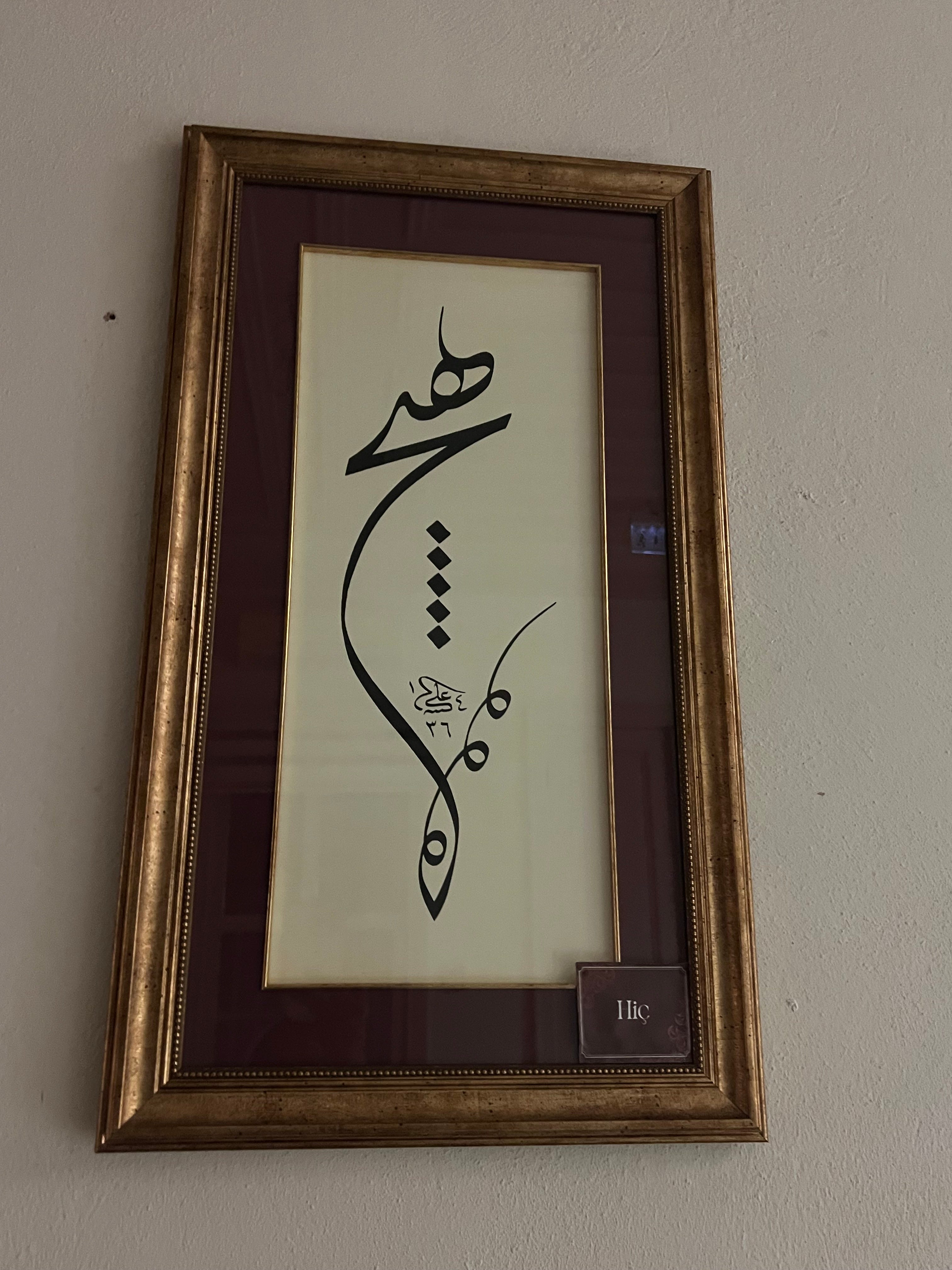
Hikmah: Wisdom…. The missing link to peace and harmony

this article is from my notes on the tafseer of Surah Luqman opening ayahs by a Turkish Psychologist
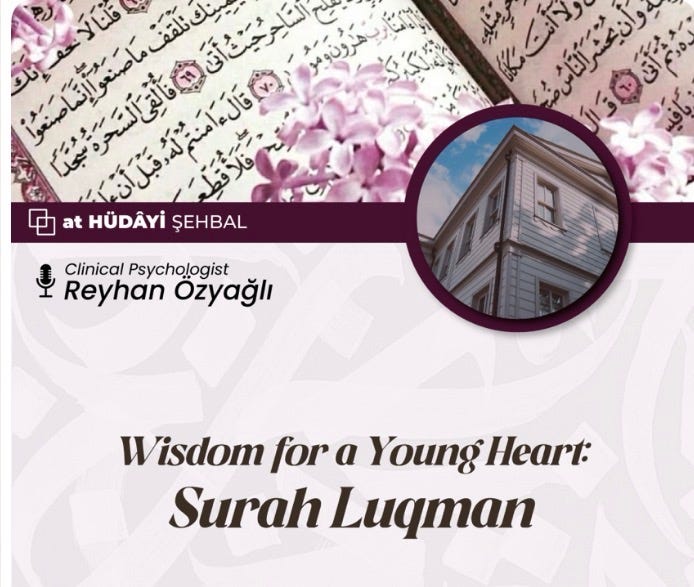
presented at the Women’s cultural Center at the Aziz Mahmut Hüdayi complex in Istanbul
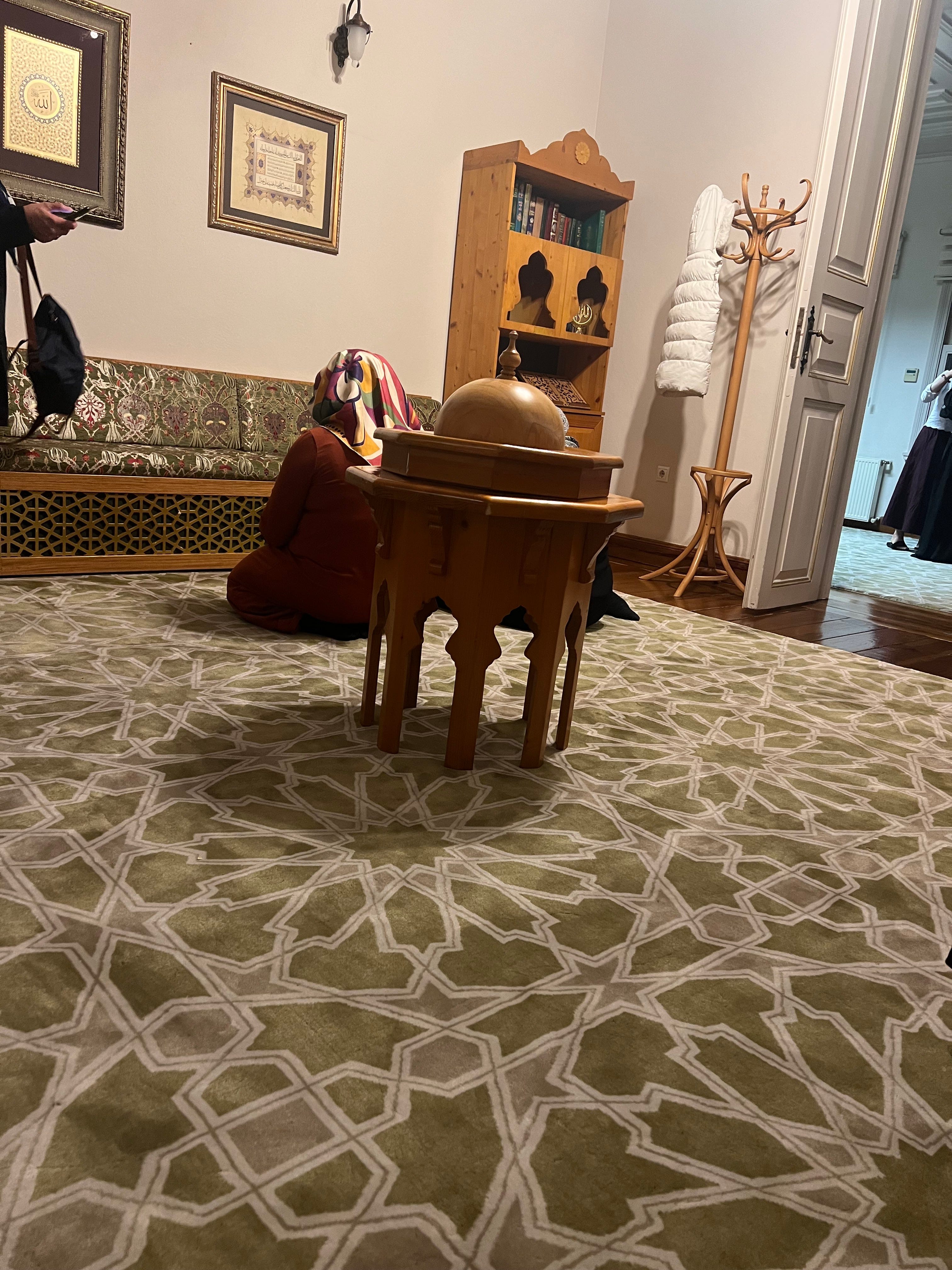
Surah Luqman — Page Two
Hikmah (Wisdom): Between Father and Son — and Beyond
Surah Luqman begins as a conversation between father and son, but its lessons expand far beyond the family and can be applied to all people and circumstances.
Allah introduces the surah by emphasizing that the Qur’an itself is a source of wisdom:
“Alif Lam Meem. These are verses of the Wise Book.”
(Qur’an, Surah Luqman 31:1–2)
And Allah says:
“He grants wisdom to whom He wills, and whoever has been granted wisdom has certainly been given abundant good. But none will remember except people of understanding.”
(Qur’an, Surah al-Baqarah 2:269)
This raises an important question:
What is Hikmah? How do we attain it? And what kind of person is granted wisdom?
Wisdom is a gift. It is a treasure. But Hikmah does not arise from information alone. It requires reflection, restraint, and the ability to pause before acting, speaking, or judging.
What is Hikmah?
Definition:
Knowledge + Understanding + Akhlaq (Moral Character) + Right Practice = Hikmah (Wisdom)
Hikmah includes:
1. Self-Control
The Arabic root of hikmah is related to the bit placed in a horse’s mouth—something that guides and restrains. Wisdom includes controlling one’s behavior and understanding one’s role in society.
1. Accuracy and Competence
The ability to express truth correctly and apply it appropriately.
2. Application of Revelation
Some scholars define Hikmah as the Sunnah of the Prophet ﷺ—the practical application of the Qur’an.
3. Understanding Cause and Effect
Wisdom is the ability to evaluate events, anticipate outcomes, and take the right step at the right time.Surah Luqman demonstrates how a wise father reacts and interacts with his son.
The Father’s Role in Moral Guidance
A wise father speaks to his child.
“And when Luqman said to his son while advising him…”
(Surah Luqman 31:13)
This demonstrates the moral authority and responsibility of the father in the family. He is entrusted with the moral and spiritual formation of the household.
The Prophet ﷺ said:
“No father has given a child anything better than good manners.”
(Tirmidhi)
The Qur’an gives us examples of fathers who nurtured their children with wisdom:
* Yaqub reassured and elevated Yusuf:
“And thus will your Lord choose you…”
(Surah Yusuf 12:6)
This gave Yusuf self-worth and vision.
* Ibrahim worked alongside Ismail in building the Ka‘bah:
“And when Ibrahim was raising the foundations of the House, and Ismail…”
(Surah al-Baqarah 2:127)
They were walking together, working together, worshipping together.
The father, then, is guide, adviser, and moral trainer.
What Is the Mother’s Role?
The Qur’an also highlights a distinct and profound role for mothers.
Her role is often connected to emotional regulation, compassion, attachment, and nurturing inner resilience.
Consider:
The Mother of Musa
Moses’s mother was inspired, frightened, separated from her child, and then reassured by Allah:
“And We inspired the mother of Musa…”
(Surah al-Qasas 28:7)
Her story is deeply emotional, yet anchored in trust.
Maryam
Maryam cried in anguish:
“Oh, I wish I had died before this and had been forgotten, forgotten entirely.”
(Surah Maryam 19:23)
The Qur’an shows her as profoundly human in distress.
Contrast this with Musa at the sea:
“No! Indeed my Lord is with me; He will guide me.”
(Surah al-Shu‘ara 26:62)
One expresses anguish. The other expresses certainty.
The Qur’an does not diminish either. It reveals the full human range.
Women in the Qur’an are often portrayed in relation to emotional depth, vulnerability, attachment, and compassion. This should not be read as weakness, but as part of the architecture of human development.
In children’s education, many roles are often assigned to women, but the Qur’an especially highlights their role in emotional growth, while fathers are often shown emphasizing guidance and moral training.
These roles complement one another.
Loneliness and Human Connection
Human beings need acceptance and attachment to community.
The recent global loneliness crisis reminds us that isolation harms the soul as well as the body. The Qur’an anticipated this reality by emphasizing companionship, family, and belonging.
How Do We Attain Hikmah?
1. Through Ihsan (Excellence in Conduct)
When a person improves behavior and acts with ihsan, Allah grants wisdom.
Regarding Yusuf:
“And when he reached maturity, We gave him judgment (hukm) and knowledge. Thus do We reward the doers of good.”
(Surah Yusuf 12:22)
2. Through Doing Good
“Is there any reward for goodness except goodness?”
(Surah al-Rahman 55:60)
And:
“And do good as Allah has been good to you.”
(Surah al-Qasas 28:77)
Goodness invites divine increase—including Hikmah.
3. Through Reason (‘Aql)
Hikmah is attained through intellect rightly used.
Reason works as a guide in the formation of wisdom:
* It connects events
* It perceives cause and effect
* It turns surface information into deeper understanding
As Allah says:
“Whoever is granted wisdom has truly been given abundant good.”
(Surah al-Baqarah 2:269)
4. Through Curiosity and Reflection
Curiosity is often the beginning of wisdom.
“Do they not look at camels—how they are created?”
(Surah al-Ghashiyah 88:17)
Curiosity causes a person to ask questions.
Questions lead to learning.
Learning matures into understanding.
And understanding, when joined to character and right action, becomes Hikmah.
Final Reflection
Surah Luqman is not merely about parental advice.
It is a map of moral formation.
It shows:
* How a father guides
* How a mother nurtures
* How wisdom is formed
* How revelation shapes character
* How reason, curiosity, and goodness lead to Hikmah
And perhaps most importantly:
Wisdom is not merely knowing what is right.
It is doing the right thing, in the right way, at the right time, for the sake of Allah.
MY NOTE: wisdom comes in the footsteps of Tazkiyah tun Nafs.